
What is the mahr (dower) and how does it work?
What is the mahr and how does it work? An explanation of the dower as the woman's right, the amount, the timing of payment, and common misconceptions.
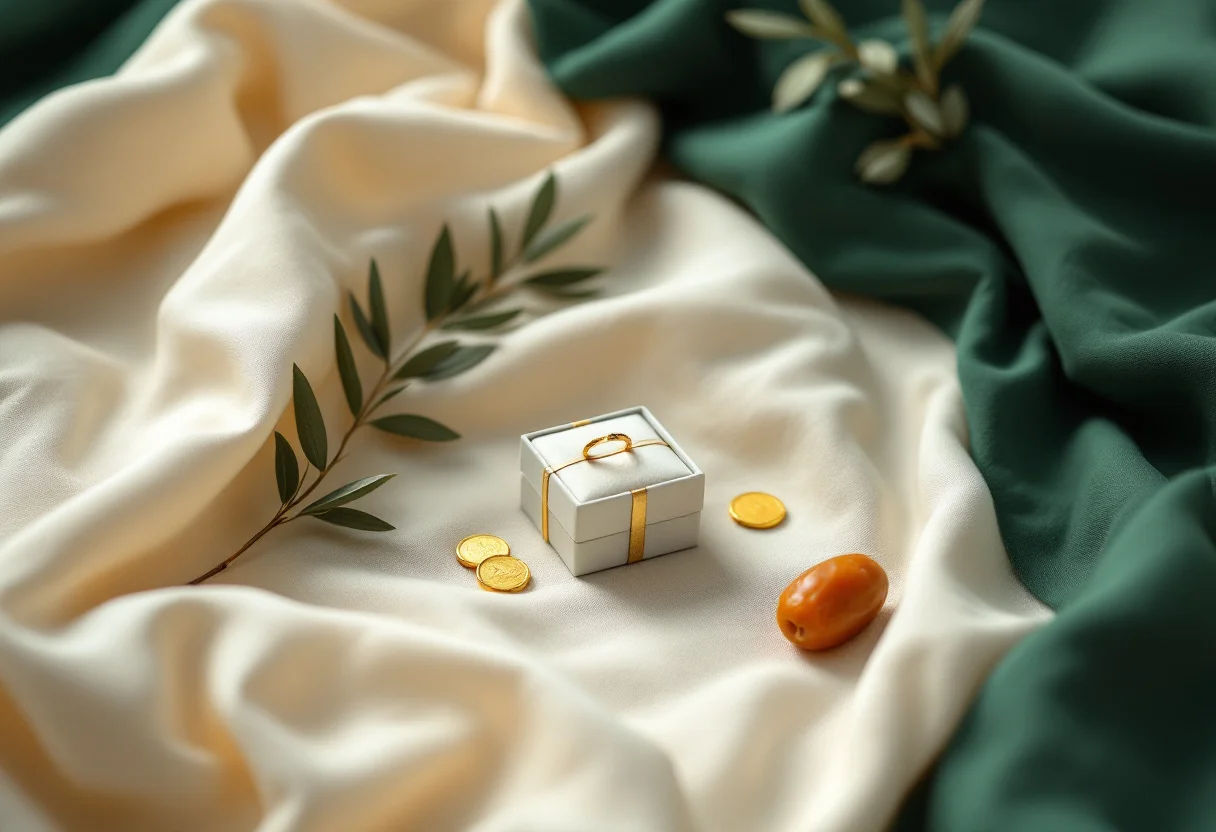
The mahr, often called the dower in English, is a fixed part of the nikah, but there are many misconceptions about it. To whom is it paid, how much should it be, and when? And is it a price for the bride, or something quite different? On this page we explain what the mahr actually is, how it works, and which misconceptions are best cleared up. It's an explanation of the general principles; for the precise details in your situation, an imam or scholar is the right person to ask.
What exactly is the mahr?
The mahr is a gift that the man gives to the woman at marriage. It's a right of the woman, laid down in the Quran, where in surah an-Nisa it states that men must give women their dower as an obligatory gift.
Important to be clear about right away: the mahr goes to the bride herself, and to no one else. It's her property, and she decides what happens with it. She can keep it, save it, spend it, or give it away; that's entirely her choice. The wali or the family has no right to it and may not withhold any of it.
The mahr symbolises the seriousness of the marriage and the respect and devotion of the man. It's not a formality, but a concrete obligation that underscores the value of the union.
To whom is the mahr paid? (the biggest misconception)
This is the point where most confusion sits, so it deserves its own place. The mahr is emphatically not a payment to the bride's family, nor a "price" you pay for a woman.
In the time before Islam, it happened that the bride's family pocketed the dower. Islam deliberately broke with that: the mahr is for the bride alone. Confusing the mahr with a bride price that goes to the family, or with customs from some cultures where it's actually the woman's family who must pay, does no justice to what the mahr really is.
So don't see it as a transaction, but as a right that protects the woman's independence and dignity. It gives her something that's entirely hers.
How much should the mahr be?
People often imagine too much here. There's no fixed, high sum that's obligatory. Some schools of law mention a small minimum amount, and there's no legal upper limit, but the spirit of the tradition points precisely to modesty.
The Prophet ﷺ encouraged a low, attainable mahr. In a well-known narration, a man wanted to marry but had nothing of value; he was advised to give even an iron ring, and when that too wasn't there, teaching what he knew of the Quran was accepted as the mahr. There's also the well-known saying that the marriages with the most blessing are those with the lightest mahr.
The amount is determined in practice through mutual agreement and depends on what's appropriate and attainable. It can be money, gold, a possession, or even something non-material of value. It's not about the amount, but about the sincere gift.
When is the mahr paid?
The mahr can be arranged in two ways, and often they're combined:
Part or all of it can be given immediately at the conclusion of the nikah. This is called the prompt mahr.
Part can be deferred, payable at a later agreed moment or, for example, upon death or divorce. This is called the deferred mahr. As long as the deferred part isn't paid, it remains a debt of the man to the woman.
Whatever you agree, it's best to record it clearly, so no uncertainty arises about it later. This belongs to the arrangements around the nikah, which we describe in what a nikah is and in the steps of an Islamic marriage.
And in the case of divorce?
The mahr remains, in principle, entirely the woman's. If a divorce takes place after the marriage has been consummated, she keeps the full mahr. If the divorce happens before that and the mahr had already been fixed, then according to the Quran half of it is due to her, unless one of the parties voluntarily waives it.
This shows that the mahr also has a protective function: it gives the woman a degree of financial security.
Is the nikah valid without a mahr?
A frequently asked question. For the majority of scholars, the mahr isn't a condition for the validity of the nikah; the marriage is therefore valid, even if the mahr isn't mentioned. But it remains an obligation of the man. If nothing is agreed, the woman still has a right to an appropriate mahr, comparable to what's customary for women in her position.
This is exactly the kind of detail on which the schools of law sometimes differ, so for your situation it's wise to put it to an imam or scholar. If you want to know more about the other roles and arrangements around marriage, also read what a wali is.
Frequently asked questions
To whom is the mahr paid?
To the bride herself, and to no one else. It's her property; the family or the wali has no right to it. It's not a payment to the family and not a bride price.
How much should the mahr be?
There's no obligatory high sum. The tradition actually encourages a modest, attainable mahr. It can be money, gold, or something else of value, determined by mutual agreement.
When must the mahr be paid?
Immediately at the nikah, deferred to a later moment, or a combination. A deferred part remains a debt of the man until it's paid.
Is a marriage valid without a mahr?
For most scholars, yes, because the mahr isn't a validity condition. The woman does keep a right to an appropriate mahr, even if nothing was agreed.
Want to get to know someone in a way where the right arrangements and respect for both parties are taken seriously from the start? At Vesile, everything revolves around a serious introduction with the intention to marry, with an eye for the Islamic practice.