
What is a nikah? And how to begin in the Netherlands
What a nikah is, what it involves and how it fits alongside Dutch law. A clear starting point when you want to marry.
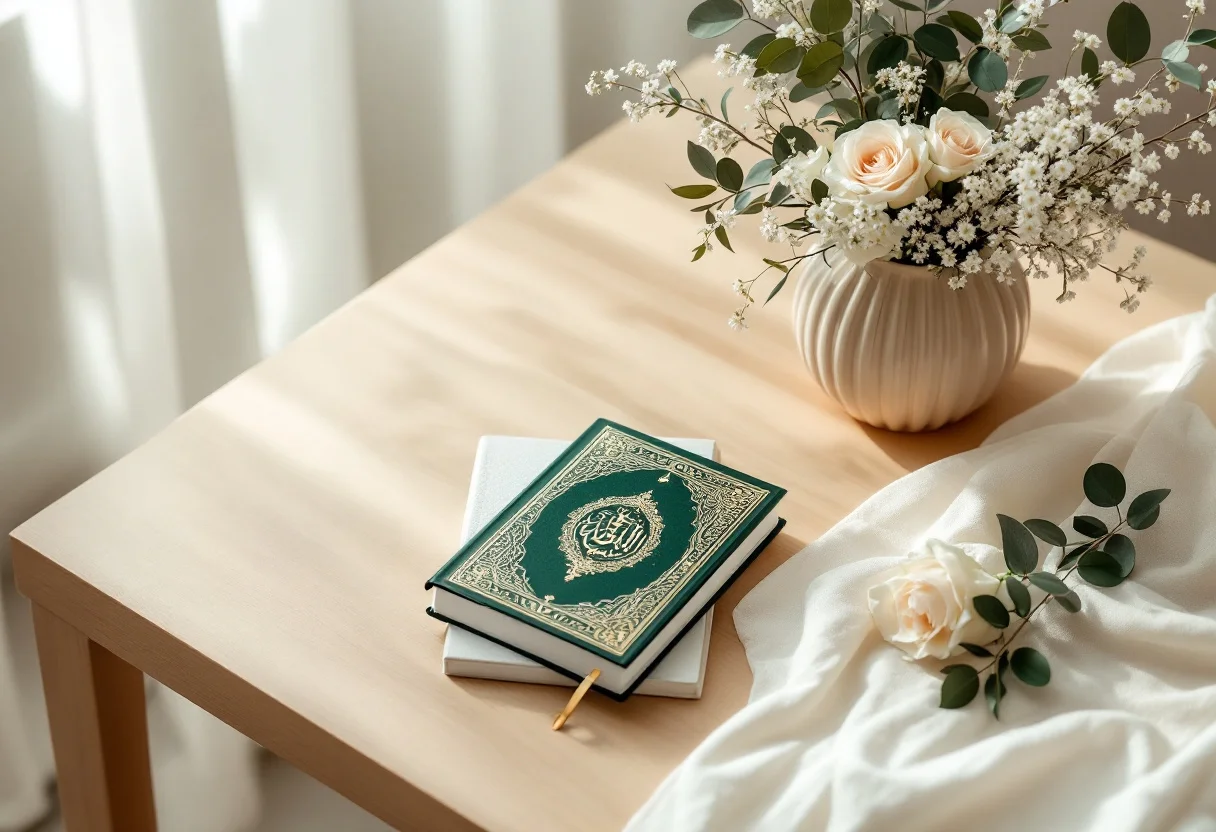
What a nikah actually is
A nikah is the Islamic marriage: the religious bond between a man and a woman, entered into according to the guidance of Islam. It is the moment two people give their consent before Allah and in the presence of witnesses, and continue as a married couple.
A nikah is more than a ceremony. It is an agreement with mutual rights and duties, carried by the intention to build a life together in faith. At its core it comes down to consent: both partners choose each other freely and knowingly. Without that free choice there is no valid nikah.
Where a wedding in many cultures is mainly a big celebration, the nikah puts the emphasis on the bond itself. The festivities around it vary widely from family to family. The nikah is the heart of it, the rest is how you fill it in.
What a nikah involves
A nikah has a number of fixed elements. How each is handled varies by school of thought and by family, but the core is widely shared.
Consent from both partners. This is the foundation. Both people have to say yes of their own free will. Coercion, from any side, makes a nikah invalid.
The wali. For the woman there is usually a wali, a marriage guardian. This is most often her father or a close male relative. The wali looks after her interest and helps give shape to the bond. There is more to say about the exact role of the wali, and what applies when there isn't one, than fits here. That deserves its own explanation.
Witnesses. A nikah is concluded in the presence of witnesses. They confirm that the bond was genuinely entered into and with consent. The number and the details depend on the school of thought.
The mahr. This is the gift from the man to the woman, sometimes called a dowry. The mahr is her property and a sign of commitment and responsibility. The amount or the form is agreed in advance and should be set down explicitly, not left vaguely for later.
Together these elements make the nikah what it is. They make sure the bond does not come about quietly or one-sidedly, but consciously and visibly to the people around the couple. If you want to know what exactly is required for each element, you will find the full conditions for a valid nikah in a separate explanation.
The nikah and Dutch law
This is the question many people are stuck on, and where information from abroad often falls short. The Netherlands has its own rules.
In short: in the Netherlands the law recognises only the civil marriage. An Islamic marriage on its own has no legal effect. As far as the government is concerned, a nikah alone does not make you married. You count as cohabiting, or even as single.
On top of that, the order is fixed by law. Dutch law requires that a civil marriage has taken place before a religious marriage is concluded. An imam or other official who performs a religious marriage before the civil one is committing an offence. That does not apply to the couple themselves, but the rule is real.
Why does this matter? Because the consequences are concrete. Without a civil marriage you have no automatic inheritance rights and no right to partner alimony in the event of a divorce, and none of the shared arrangement of your finances that the law ties to a marriage comes into being. For women in particular this can turn out badly if a relationship ends unexpectedly.
That is why many Muslims in the Netherlands deliberately choose both: first the civil marriage at the town hall, then the nikah. That way it is right religiously and legally, and you build your life together on a footing that holds on both sides. Some couples do both on the same day, others shortly after one another. That is a choice you make with your partner and family.
This is not legal advice for your specific situation. If you are unsure about the consequences in your case, get proper guidance. But the main point is clear: a nikah and a civil marriage are two different things, and in the Netherlands you need both to be married in the eyes of your faith and of the law.
Where do you begin?
Back to the question we started with. You want to marry, so now what?
The first step is almost never the nikah itself. That comes once you have found the right person and the two of you, often with your families involved, reach the conclusion that you want to go on together. Before that comes getting to know each other, in a way that fits your faith, with the intention to marry rather than something non-committal. What that path looks like step by step, from the first introduction through the khitba to the nikah, is set out in Islamic marriage: the steps.
That getting-to-know-each-other is exactly where it gets difficult for many people. The ordinary dating apps don't feel right. Too non-committal, too focused on the wrong intention, too little respect for how you want to approach this. And the circle of family, mosque and acquaintances doesn't always produce the right person.
That is what Vesile is for. We are a platform for Muslims in the Netherlands who are seriously looking for a marriage partner. No swiping and no algorithm deciding for you, but a human assessment and an approach that suits people who have marriage as their goal. You only see photos once there is a mutual introduction, everyone signs a declaration of intent beforehand, and identities are verified. That way you begin the path towards your nikah in a place where the intention is right.
Frequently asked questions
Is a nikah legally valid in the Netherlands?
No. In the Netherlands the law recognises only the civil marriage. A nikah on its own has no legal effect. In the eyes of the law, a nikah alone does not make you married. That is why many Muslims choose both: first the civil marriage, then the nikah.
Do I marry civilly first or do the nikah first?
By law the civil marriage comes first. An official who performs a religious marriage before the civil one is committing an offence. In practice many couples do both on the same day or shortly after one another, with the town hall first.
What do you need for a nikah?
The core is the consent of both partners, usually a wali for the woman, witnesses and an agreed mahr. How each is handled varies by school of thought and family.
What is the mahr?
The mahr is the gift from the man to the woman at the nikah, sometimes called a dowry. It is her property. The amount or the form is agreed in advance and should be set down clearly.